This article may contain affiliate links. If you purchase through a link, I may earn a small commission at no extra cost to you. Read my full Affiliate Disclosure.
The couch didn’t fit through the door. I mean that literally – we’d gotten it as far as the stairwell landing before we realized it was never, ever going to make the turn. That was my third apartment. And honestly? Not even close to my worst small-space mistake.
If you’ve been searching for a real guide to decorating small spaces – one that doesn’t just tell you to “use mirrors and light colors” and call it a day – you’re in the right place. Because I’ve made the mistakes, bought the wrong furniture, painted the walls four times, and slowly figured out what actually works in a room that doesn’t give you much margin for error.
This guide covers layout, lighting, furniture choices, and the stuff nobody ever warns you about. Whether you’re working with a tiny studio living room or a space that’s just… kind of awkward, this is where to start.
Table of Contents :
Your Quick-Start Plan for Decorating Small Spaces
Before we get into the deep stuff, here’s the honest roadmap. Small spaces punish guessing more than any other environment – so a little order of operations goes a long way.
- Phase 1: Measure everything. Actual dimensions – walls, doorways, the weird alcove nobody mentions until it’s too late. Don’t skip this.
- Phase 2: Fix layout before you buy anything. Furniture placement is the single biggest lever in a small room. Get it right first.
- Phase 3: Establish one focal point. One. The room needs something to organize itself around – a fireplace, a gallery wall, a great sofa.
- Phase 4: Layer your lighting. At minimum two non-overhead sources. This alone will change how your room feels at 7pm.
- Phase 5: Add texture, not stuff. A jute rug, a linen throw, one plant. Warmth without clutter.
- Phase 6: Edit before you add. When in doubt, remove something. Small spaces reward restraint.
Everything in this guide traces back to these six phases. Keep them in your head as we go.
The Mistake Almost Everyone Makes When Decorating Small Spaces
Here it is: buying small furniture because you think it’ll make the room feel bigger. I did this. Most people do. You see a tiny apartment, you think tiny furniture, and you end up with a room full of small, spindly pieces that look like they’re afraid of each other.
It’s completely understandable – it feels logical. Less stuff, more space. But what actually happens is that a bunch of small, mismatched-scale pieces creates visual noise. Your eye has nowhere to rest. The room feels busy and cluttered even when it’s technically “empty.”
What designers mean when they talk about scale and proportion is this: furniture should relate to the room AND to each other in a way that feels intentional. One properly sized sofa – something that actually fits your wall – will make a small room feel more spacious than three little chairs that are all slightly wrong for the space.
I changed my mind about this completely after rearranging my last apartment three times in six months. The version that finally worked? Fewer, bigger pieces. More breathing room between them. It felt counterintuitive until it didn’t.
Guide to Decorating Small Spaces: What Actually Works
Furniture Placement Is Everything (And Most People Get It Wrong)
The most common small-space layout mistake – besides the furniture scale issue above – is pushing everything against the walls. It feels like you’re maximizing space. You’re actually shrinking it. When every piece hugs the perimeter, the center of the room becomes this weird dead zone, and the whole thing looks like a waiting room.
Floating furniture – pulling your sofa a foot or two away from the wall – creates definition and makes the room feel deliberately designed rather than just filled. Yes, even in a small space. Yes, even when it feels wrong at first. Try it before you dismiss it.
What you’re aiming for is what designers call zoning – using furniture placement to create distinct areas within a single room. In a small living room, that might mean a clear seating area anchored by a rug, with a reading corner near the window. Two zones. One room. Suddenly it feels intentional instead of cramped.
Keep 2-3 feet of clear traffic path throughout. This isn’t just aesthetic – it’s how the room actually functions day to day. And keep seating within roughly 8-10 feet of each other if you want the space to feel like a real conversation area rather than chairs that happen to share a room.
Practical check: stand in your doorway and trace the natural walking path through the room. If you’re instinctively weaving around furniture, something needs to move.
Light Is Doing More Work Than You Think
I remember standing in my own living room on a Tuesday evening, overhead light blazing, and feeling like I was in a hospital waiting area. The room was fine. The furniture was fine. But that single overhead fixture was flattening everything – no shadow, no depth, no warmth. Just… glare.
Professional lighting designers call this layered lighting, and the concept is simple: you need at least three types working together. Ambient light handles the overall brightness. Task lighting handles specific activities – reading, working. Accent lighting draws attention to things worth noticing – a plant, a shelf, a piece of art.
For small spaces specifically, warm bulbs matter enormously. Aim for 2700-3000K – that warm amber glow that makes a room feel like someone actually lives there rather than a showroom with fluorescents. And get a dimmer if you can. A dimmer switch on even a basic overhead light will change your relationship with a room. (Renters: plug-in lamp dimmers exist and they work.)
Budget note: two decent floor lamps in the $50-100 range will do more for your small living room than almost any other single purchase. You don’t need anything expensive – you need multiple sources at different heights.
The Rug Rule That Nobody Follows (But Should)
Too small. That’s the almost universal small-space rug mistake. A 5×7 rug floating in the middle of a living room with furniture legs hanging off every edge makes the whole room feel like it was decorated by someone who gave up halfway through.
The rug needs to be big enough that the front legs of your main seating pieces sit on it. In most living rooms, that means at least an 8×10. I know that sounds too big. It isn’t. A properly sized rug anchors the seating area into one cohesive zone and – counterintuitively – makes the room feel larger because it establishes clear visual boundaries.
Material reality: if you’re on a budget, synthetic rugs in the $100-200 range are genuinely fine for most spaces. The quality varies a lot, so feel it before you buy if possible – look for something with some weight to it. Natural fiber options like jute bring beautiful texture and warmth, but fair warning: they shed noticeably for the first few months and are difficult to deep clean. Wool rugs are the softest and most durable option but sit in the $300+ range for anything worth buying.
Renters: a good rug also covers a multitude of flooring sins. Some of the worst floors I’ve lived with became completely invisible under the right rug.
Color and Visual Weight in Small Spaces
Okay, I have a strong opinion about this one. Everyone will tell you to paint your small room white. And white works – it does – but it’s not your only option, and it’s not always the best one.
What matters more than the specific color is how you use it. The 60-30-10 approach – roughly 60% dominant color (walls, large upholstery), 30% secondary (rug, curtains, secondary furniture), 10% accent (throw pillows, objects, plants) – gives a room visual structure that feels intentional regardless of which specific colors you choose. Without that structure, even a white room can feel chaotic.
Visual weight – the way dark or heavy pieces anchor a room so everything else feels intentional – matters hugely in small spaces. One dark anchor piece (a deep charcoal sofa, a moody navy rug) gives the eye somewhere to land. A room where everything is equally light can feel washed out and undefined, not spacious.
One honest caveat: color in photos and color on your actual walls in your actual light are completely different experiences. If you’re going to paint – even if it’s just an accent wall – get a sample pot and live with it for a few days before committing. I’ve repainted four rooms. Every single time, I should have tested the color longer first.
Honest Truths About Decorating Small Spaces I Learned the Hard Way
Furniture quality actually matters more in small spaces. In a large room, a cheap piece kind of disappears. In a small room, everything is visible all the time. That particleboard coffee table with the slightly-off finish? You’re going to see it every day. If you’re buying on a budget – and most of us are – put your limited quality budget toward the one or two pieces that are always visible. And if you’re buying a sofa: ask about foam density before you commit. Foam density (measured in pounds per cubic foot) is the single biggest predictor of sofa longevity – more than the fabric, more than the frame – and budget sofas almost always cut corners here. High-density foam (1.8 lbs/cubic foot and above) holds its shape for years. The cheaper stuff collapses within 18 months. It’s worth asking.
The “just add more storage” instinct usually makes things worse. I spent two years buying storage bins, baskets, and cube organizers trying to solve a clutter problem. What I was actually doing was creating a storage problem. More storage containers don’t fix clutter – they just give clutter somewhere to hide temporarily. The honest answer, and the one nobody wants to hear, is that a small space requires fewer things in it. I’m still working on this. My shelves are still a little too full. But I’ve gotten better at not adding before editing.
The most transformative things in my small spaces have almost never been the things I planned. A second-hand lamp from a thrift store. Moving a plant from one corner to another. Switching from dark curtains to sheer ones and suddenly having a completely different room. Small spaces are sensitive – they respond to small changes more dramatically than big rooms do. Which is actually kind of great, once you stop fighting it.
I spent more on one of my apartments than I’ve ever admitted publicly, and it still felt wrong for almost a year. I followed every rule I knew. Good rug, layered lighting, floating furniture, the whole thing. And it just… didn’t feel like mine. A friend walked through and said “you’re decorating what you think a nice apartment should look like, not what you actually like.” That stung a little. But she was right. The room finally clicked when I stopped trying to make it look like a photo and started making it look like me.
Budget-Friendly Small Space Decorating Checklist
- ☐ Room dimensions measured before any furniture purchase
- ☐ One clear focal point established (not competing with others)
- ☐ Rug properly sized – front legs of main seating pieces sit on it
- ☐ At least 3 light sources, no more than 1 overhead only
- ☐ Clear 2-3 ft traffic paths through the room
- ☐ Furniture floated away from walls (even slightly)
- ☐ No overcrowded surfaces – every surface has some breathing room
- ☐ At least one texture contrast present (soft + hard, matte + shiny)
Making This Guide to Decorating Small Spaces Work in Your Real Home
If you’re renting: Almost everything in this guide is renter-friendly. Furniture placement, lighting, rugs, and textiles require zero drilling or permanent changes. For walls, removable peel-and-stick wallpaper has gotten genuinely good – it’s a real option now, not a compromise. Command hooks handle art and mirrors on most wall types. The one thing to check before any wall installation: your lease and your wall material.
If you’re working with a strict budget: Prioritize in this order. First: the right-sized rug (even a budget synthetic one). Second: one floor lamp or table lamp to add a second light source. Third: edit what you already have before buying anything new. The honest reality is that most small-space problems aren’t solved by buying more things – they’re solved by moving, removing, or adjusting what’s already there. Budget for those first two items (roughly $150-250 total is doable) and spend time before you spend more money.
If you’re starting from scratch vs. working with existing furniture: If you have existing pieces, start with layout experiments before anything else. Move things. Try things. A different furniture arrangement costs nothing. If you’re starting from scratch, buy the sofa and rug first – together, in the right scale – and build outward from there. Everything else can wait.
If you’re doing this alone and feeling overwhelmed: Do one thing. Just one. Move the sofa away from the wall a foot. Add one lamp. Roll out the rug you’ve been putting off buying. Small spaces respond quickly. One good decision often cascades into clarity about the next one. Pick the thing that bothers you most and start there.
Your Small Space Decorating Questions, Answered Honestly
Q: Do mirrors actually make a small room feel bigger?
A: Yes – but placement matters. A mirror on a wall opposite a window bounces natural light and genuinely does create a sense of depth. A mirror on a random interior wall mostly just shows you the room reflected back. Height matters too – floor-to-ceiling or tall mirrors work better than small decorative ones. It’s a real trick, not a myth, but it requires some intention to work.
Q: Should I use curtains in a small room, or will they make it feel smaller?
A: Depends on how you hang them. Curtains hung at ceiling height (not at the window frame) and extending wider than the window on both sides make a small room feel dramatically taller and larger. Curtains hung tight to the window frame, barely wider than the glass – those make a room feel smaller and kind of sad. The fabric weight matters too: light, sheer linen panels in a warm neutral let light through while adding softness. Dark, heavy curtains in a small space can feel oppressive unless that’s specifically the mood you’re going for.
Q: Is it worth painting a small living room a dark color?
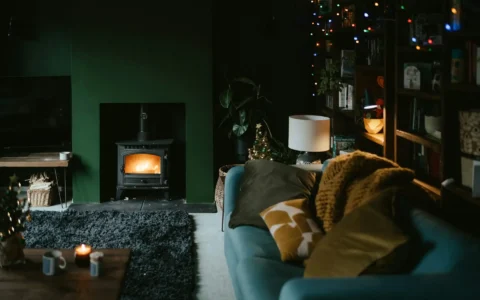
A: Honestly – sometimes yes. A deep, moody color applied consistently (walls and ceiling in the same tone) can make a small room feel intimate and intentional rather than just cramped. It’s a different feel than an airy white room, but “different” isn’t the same as “worse.” What doesn’t work is dark walls with poor lighting. If you go dark, layered lighting becomes even more essential – warm, multiple sources, dimmers if possible. I’d still sample the color extensively before committing. Paint is reversible, but repainting a whole room is a weekend you won’t get back.
Q: What’s the single most impactful change I can make in a small living room right now, today?
A: Move your furniture away from the walls. I know I’ve said this already – but it’s that important. It costs nothing, takes twenty minutes, and will change how the room feels immediately. If it looks wrong to you at first, give it 48 hours before moving it back. Seriously. It takes a little getting used to, and then suddenly you can’t imagine why you ever had it the other way.
The Thing About Small Spaces Nobody Really Prepares You For
Here’s what I’ve figured out, slowly, over years of tiny apartments and awkward rooms and furniture that didn’t fit through doors: a small space forces you to be intentional in a way that bigger spaces let you avoid. Every piece matters. Every decision shows. There’s nowhere to hide the stuff that isn’t working.
That sounds like a burden. And sometimes it is. But it’s also – once you stop fighting it – kind of freeing. Because when you’re truly thoughtful about what goes in and how it’s arranged, a small room can feel more considered, more personal, more like you than a large room full of things you’ve accumulated without much thought.
The guide to decorating small spaces that actually helps isn’t one that gives you a formula. It’s one that helps you understand what’s happening in your specific room so you can make the right calls for your actual life. You don’t need the perfect pieces. You need to understand why the pieces you have aren’t quite working yet.
Try one thing this week. Tell me what happens. And if you’ve already got a small-space win or a spectacular failure – I genuinely want to hear about it. The best advice I’ve ever gotten about this stuff has come from people who were in the same cramped corner I was.