This article may contain affiliate links. If you purchase through a link, I may earn a small commission at no extra cost to you. Read my full Affiliate Disclosure.
For a long time, my living room had plants. Lots of them. A pothos in a plastic nursery pot shoved in the corner. A little succulent collection on the windowsill that looked more like clutter than intention. A snake plant I’d bought specifically because everyone said it was impossible to kill – sitting in the wrong spot, slowly yellowing at the edges, proving everyone wrong.
The room had living room indoor plants. It just didn’t feel like it had decor. And I couldn’t figure out the difference until I stopped thinking about plants as plants and started thinking about them the way a designer thinks about any object in a room – as something with visual weight, scale, and a specific job to do.
That shift changed everything. This guide is what I wish someone had handed me three apartments ago.
Table of Contents :
Your Quick-Start Plan for Living Room Plants as Decor
Before we get into specific plants and placement ideas, here’s the honest order of operations – because most people skip the first two steps and wonder why things look off.
- Phase 1: Assess your light. Walk your room at different times of day. North-facing windows mean low light – this determines everything about which plants can actually survive where you want to put them.
- Phase 2: Identify your empty anchor spots. Find your blank corners, bare walls, and dead zones first. Plants placed to solve a visual problem always look more intentional than plants placed randomly.
- Phase 3: Choose one statement plant. One. Bigger than you think. Then build from there.
- Phase 4: Decide on a pot style and stick to it. All terracotta, all white, all black matte – pick a lane. Mismatched pots are the number one reason plant collections look chaotic instead of curated.
- Phase 5: Add height variation. Use plant stands, shelves, or hanging planters so everything isn’t sitting at the same level on the floor.
- Phase 6: Edit. If something isn’t working aesthetically – not just health-wise – move it or remove it. A plant in the wrong spot is worse than no plant.
The Mistake Almost Everyone Makes With Indoor Plant Decor
The most common mistake isn’t buying the wrong plant. It’s buying too many small ones.
I did this for years. I’d go to the garden center, grab four or five little four-inch plants because they were affordable and charming in the store, bring them home, scatter them around the room – and the space would somehow look worse. More cluttered. More amateur. I couldn’t understand why.
Here’s what was actually happening: small plants create visual noise. A cluster of tiny pots reads as clutter to the eye, the same way a countertop covered in small decorative objects looks busier than one with a single sculptural piece. What designers call visual weight – the way certain objects anchor a room versus scatter your attention – applies to plants exactly the same way it applies to furniture.
One 5-foot fiddle leaf fig does more for a living room than twelve small succulents. One large statement plant has visual weight. It reads as intentional. The collection of tiny pots just reads as unresolved.
This doesn’t mean small plants have no place – they absolutely do, in the right spots and with the right styling. But if your room currently looks cluttered with greenery, the fix is almost always to consolidate and scale up, not to add more.
Best Living Room Indoor Plants That Double as Decor
Tall Statement Plants for Empty Corners
Corners are the hardest spots in any room to style – and the most transformative when you get them right. A bare corner creates what designers call dead space: it doesn’t anchor the room or contribute to the visual composition, it just sits there making the room feel unfinished. A tall plant solves this immediately, and in a way that a lamp or side table often can’t, because it brings organic shape and movement into a geometric space.
The fiddle leaf fig is the obvious choice, and honestly, the reputation is earned – even if the plant is notoriously dramatic about its care requirements. What makes it work visually is the large, architectural leaf shape and the way it naturally takes up vertical space without spreading horizontally. It fits a corner without crowding it. That said: if you have low light, dry air, or a habit of inconsistent watering, don’t start here. A dying fiddle leaf fig looks worse than no plant at all.
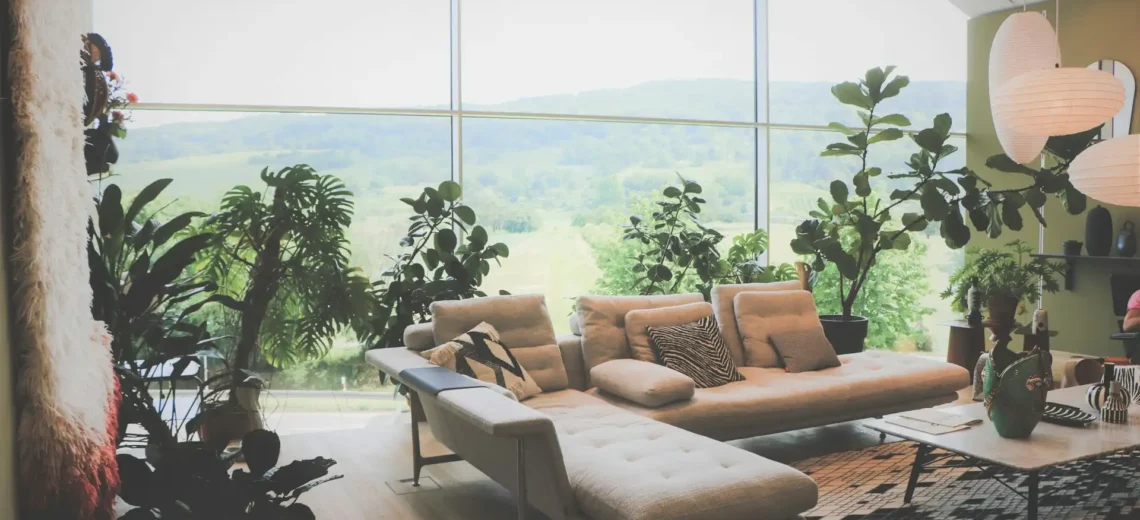
For a lower-maintenance tall option, the Monstera deliciosa is genuinely forgiving and grows into a genuinely stunning sculptural shape over time. The split leaves photograph beautifully and have that organic modern quality that works in minimalist, boho, and contemporary spaces alike. The bird of paradise is another strong choice if you have bright indirect light – it grows slowly but the broad paddle-shaped leaves have real presence. A large, mature specimen (usually in a 10-inch pot or larger) in a plain ceramic planter reads like a piece of furniture. It anchors a corner the way a quality armchair does.
Realistic budget note: A starter fiddle leaf or monstera in a 4-6 inch pot runs roughly $15-40, but it will take time to reach statement size. If you want the look now, a mature specimen in a 10-14 inch nursery pot can run $80-200 depending on your area. Add a quality ceramic planter and you’re looking at $150-300 total for a true statement corner plant. It’s an investment – but compared to what a large piece of wall art costs, it’s competitive.
Best Small Plants for Apartments and Shelves
Small plants do work – when they’re grouped with intention rather than scattered. The key is what designers call creating a vignette: a small, composed arrangement that reads as a single visual unit rather than a collection of separate objects.
The pothos remains one of the best apartment plants ever – not because it’s trendy, but because it genuinely tolerates low light, inconsistent watering, and dry indoor air in a way that very few plants do. Trail it from a high shelf or let it cascade from a plant stand, and it goes from basic to atmospheric. ZZ plants have a glossy, architectural quality that photographs like something from a design magazine – and they’re nearly indestructible in low light. For a shelf arrangement, a ZZ next to a small sculptural object and a single candle hits a completely different note than three plants crammed together.
For a styled shelf, I’d suggest grouping in odd numbers – three plants of varying heights, or one plant paired with a non-plant object (a ceramic, a small stack of books, a stone). Even numbers feel symmetrical and stiff in organic arrangements. Odd numbers feel natural.
How Light Actually Determines Everything (Not Just Survival)
This is the part most beginner guides gloss over, and it’s genuinely the most important thing to understand before buying a single plant.
Light doesn’t just affect whether a plant lives in a spot – it affects whether it thrives and looks good there. A plant in insufficient light doesn’t die immediately. It slowly stretches, yellows, drops leaves, and starts looking leggy and sad. That process takes months, and the whole time it’s sitting in your carefully styled corner looking worse every week.
North-facing windows (common in apartments) give you low light – and your plant choices need to reflect that. Low light doesn’t mean no light – it means indirect, diffused light with no direct sun. Genuinely good performers in low light include snake plants (Sansevieria), ZZ plants, pothos, peace lilies, and cast iron plants. Those are your options – and honestly, they’re not bad options. A tall snake plant in a matte black planter looks incredibly chic.
East and west-facing windows give you bright indirect light for part of the day – this is the sweet spot for most popular houseplants, including monsteras, pothos, spider plants, and most ferns. South-facing windows give you the most light and open up options like fiddle leaf figs, bird of paradise, and most succulents.
I made the mistake of buying for aesthetics first and assuming the plant would adapt. It won’t. Figure out your light situation first, then shop.
Styling With Plant Stands: The Detail That Changes Everything
If I had to credit one single thing with making my plant arrangements look more intentional – it’s plant stands. Not even expensive ones. Just the act of lifting plants to different heights creates the layered, composed quality that makes a plant corner feel styled versus dropped.
Height variation is the same principle that makes floral arrangements look professional – you want a range from low to mid to tall, so the eye travels through the grouping rather than landing flat. A tall floor plant next to a medium-height plant on a stand next to a trailing plant on a floating shelf creates depth. Everything at floor level just looks like you ran out of surfaces.
For plant stands, materials matter for how the overall look reads. Rattan and wicker bring warmth and texture into minimalist or neutral spaces – they work especially well in that organic modern aesthetic. But be aware that rattan can dry out and crack in very dry apartments, especially near heating vents in winter. Matte black metal stands are clean, modern, and photograph beautifully – they work in contemporary and industrial-influenced spaces. Solid wood stands are the most durable and feel the most elevated – they’re also the most expensive, generally $60-150 for quality. Inexpensive folding bamboo or rattan stands can look just as good; the styling matters more than the price point.
One honest caveat for renters: floor-standing plant stands don’t require any wall modification, which makes them the most rental-friendly way to add height variation. If you want a hanging planter, ceiling hooks are a permanent modification – you’ll want to patch the hole when you leave. A tension rod across a window alcove is a clever damage-free alternative for small trailing plants.
How to Style Plants Without Making Your Space Look Cluttered
The Pot Cohesion Rule
Pick one pot aesthetic and buy everything in that family. Everything. Not two terracotta and one white ceramic and one black plastic nursery pot you never got around to repotting. One cohesive pot palette makes a collection of five plants look curated. A mix of random containers makes three plants look like clutter.
My current approach: all neutral matte ceramics in varying sizes, ranging from soft cream to warm grey. The plants are different shapes, textures, and heights – so the variety comes from the plants themselves, not the pots. The visual unity comes from the containers. This is the same reasoning behind why a gallery wall with mismatched frames looks chaotic while matching frames look collected and intentional.
Negative Space Is Not Wasted Space
Every design instinct you have when you’re first decorating says more is more. More plants, more objects, more art. It takes time to trust that negative space – the breathing room around things – is what makes everything else look intentional rather than jammed in.
A single large plant with clear space around it has presence. Crowd it with three smaller plants and two decorative objects and a stack of books, and suddenly none of them read at all. The room becomes busy. Give your statement plants room to be statement plants.
The Stuff Nobody Mentions About Indoor Plant Decor
The aesthetic you see on Pinterest takes years, not weeks. Those lush, layered plant corners with mature monstera leaves and cascading pothos and a perfectly aged fiddle leaf – that took time to grow. And multiple repottings. And some failed plants along the way. Starting with a handful of small plants and growing them into something beautiful is genuinely satisfying, but it’s a slow project. Don’t judge your corner against someone’s five-year-old collection.
Nursery pots are genuinely ugly and you should almost always repot immediately. That sounds obvious, but new plant owners often leave plants in the plastic nursery pot for months – sometimes inside a decorative pot as a sleeve – and wonder why the arrangement looks cheap. The plastic pot edge peeking over the top of a nice ceramic planter kills the look entirely. When you repot into a proper container, use a pot only 1-2 inches larger than the nursery pot, and make sure it has drainage or that you understand how to water without one.
I have lost plants I was genuinely attached to, and it still stings. I had a fiddle leaf fig for fourteen months – finally thriving, finally growing – and I moved apartments and the light situation changed and it declined over three months despite everything I tried. I know it’s a plant. I also know I cried a little. If you’ve ever felt weirdly grief-adjacent about a plant dying, you’re not dramatic. You cared about something you were tending. That’s a normal thing to feel.
The “low maintenance” label is relative. Snake plants can die if you overwater them. Pothos get leggy without occasional trimming. ZZ plants grow so slowly that “low maintenance” sometimes means “looks the same as it did eighteen months ago.” Low maintenance means low maintenance – not zero. Set a phone reminder to actually look at your plants once a week. Catch problems early.
Budget-Friendly Indoor Plant Decor Checklist
- [ ] At least one plant chosen for actual light conditions – not just looks
- [ ] All plants in cohesive pot style (same material or finish family)
- [ ] At least one plant at a different height – stand, shelf, or hanging
- [ ] No more than 2-3 plants visible in any single sightline (avoid visual clutter)
- [ ] Nursery pots removed or hidden completely
- [ ] At least one plant large enough to function as a focal point
- [ ] Clear negative space around statement plants – not crowded
- [ ] Trailing or textural plants providing contrast to upright or architectural ones
Making This Work in Your Actual Apartment
If you have a small space: Less is genuinely more. One large statement plant in a corner does more than six small ones scattered around. If floor space is limited, go vertical – a wall-mounted shelf with two or three plants at eye level creates the impression of a green corner without taking up floor square footage. A hanging planter from a ceiling hook (or tension rod if you’re renting) works beautifully in a window alcove.
If you’re renting and low-light: This is honestly fine. Snake plants, ZZ plants, and pothos are all handsome plants that work in low light and don’t require any wall modifications. A tall snake plant in a quality ceramic pot on a wood plant stand is genuinely stylish – it’s not a compromise. It’s a good design choice.
If you’re starting completely from scratch on a tight budget: Buy one good plant and one good pot instead of three cheap plants in three random pots. The single well-styled plant will look better every time. Add from there slowly, keeping the same pot aesthetic as you go.
If you already have plants that aren’t working: Before buying anything new, try repotting everything into a cohesive pot style. It’s the single fastest way to make an existing plant collection look more intentional – and it costs far less than starting over.
If you called me right now feeling overwhelmed about where to start: go buy one plant that suits your light, and one pot you genuinely love. Put it somewhere intentional – a corner, a shelf, next to a chair. See how it feels. That one good decision tells you more about what to do next than any guide can.
Your Living Room Indoor Plants Questions, Answered Honestly
Q: Do I need a lot of light for statement indoor plants?
A: Not necessarily – but you need to choose the right plants for the light you actually have. The mistake most people make is buying a plant for how it looks, not for where it’s going to live. A snake plant or ZZ plant in a beautiful large ceramic pot can absolutely be a statement plant in a low-light apartment. The statement comes from scale and styling, not species.
Q: How many plants should I have in my living room?
A: It genuinely depends on the room size and your styling approach. In a small apartment living room – say 10×12 feet – I’d suggest starting with one large anchor plant and one or two smaller supporting plants before adding more. The goal is intentional, not maximal. More plants doesn’t mean better plant decor.
Q: My plants always end up looking messy – what am I doing wrong?
A: Two most likely culprits: mismatched pots, or too many small plants. Standardize your pot aesthetic first – that alone transforms how a collection reads. Then consider whether you have too many plants competing for visual attention. Consolidate before adding. And make sure you’re giving plants room to breathe rather than clustering them too tightly together.
Q: Are indoor plants worth it in a rental where I can’t control the light?
A: Yes – with realistic expectations. Research your window orientation before buying. North-facing apartments have genuinely limited light, but there are real, beautiful plants that do well in that condition. The mistake is buying a sun-loving plant and hoping it adapts. It won’t. Work with what you have and the results can be genuinely lovely.
You Can Check Also :
Small Living Room Layout Mistakes to Avoid (And What to Do Instead)
The Ultimate Guide to Decorating Your Living Room on a Budget
One Last Thing About Living With Plants
The rooms I’ve loved most weren’t the ones I planned perfectly from the beginning. They were the ones I adjusted slowly – moving a plant, switching a pot, deciding something wasn’t working and trying again. Living room indoor plants are one of the most forgiving things you can add to a space, because unlike furniture, you can pick them up and move them in about thirty seconds.
The more I’ve worked with plants as decor, the more I think the goal isn’t a finished room that looks like a photo. It’s a room that’s actually alive – that changes slightly as things grow, that has a little imperfection built into it, that looks like someone genuinely lives there. Plants do that better than almost anything else you can bring into a space.
You’re not trying to recreate a Pinterest board. You’re trying to make a room feel like yours. Start with one plant you love, in a pot that makes you happy, in a spot where it can actually survive – and go from there. That’s the whole thing, honestly.
If you try something from this guide, I’d genuinely love to know what worked for you – or what didn’t. Drop a comment below, or save the pin and come back when you’re ready to start.