This article may contain affiliate links. If you purchase through a link, I may earn a small commission at no extra cost to you. Read my full Affiliate Disclosure.
I spent almost two years buying things for my apartment living room before I realized the problem wasn’t my budget. It was that I had no idea what I was actually doing. I’d buy a throw pillow here, a candle there, a $12 picture frame that I was convinced would “pull everything together” – and somehow the room kept looking exactly the same. Cluttered. Sad. A little bit like a college dorm that grew up but didn’t quite commit.
If you’ve ever searched budget living room decor ideas at 11pm feeling vaguely defeated by your own apartment, this guide is for you. Not the Pinterest version of you – the actual you, with the weird-shaped living room and the landlord who definitely won’t let you paint.
Here’s everything I’ve learned, including the stuff I got completely wrong first.
Table of Contents :
Your Quick-Start Plan for Budget Living Room Decor
Before anything else – here’s the roadmap. Don’t skip to the fun stuff until you’ve at least read through this once.
- Phase 1: Observe and Measure – Walk your room with a tape measure before spending a single dollar. Write down the dimensions and take photos from every corner.
- Phase 2: Fix the Layout First – Furniture placement costs nothing and makes the biggest visual difference. Do this before buying anything new.
- Phase 3: Anchor With One Quality Piece – Pick one item worth investing in. Build everything else around it.
- Phase 4: Layer Your Lighting – Add at least two non-overhead light sources before calling the room done. This changes everything.
- Phase 5: Add Texture and Warmth – A rug, a throw, and a plant will do more for your space than a dozen decorative accessories.
- Phase 6: Edit, Don’t Add – Remove one thing before adding another. Most rooms suffer from too much, not too little.
The Mistake Almost Everyone Makes With Budget Living Room Decor
Here’s the thing nobody talks about: the reason most budget living rooms look cheap isn’t the budget. It’s that people try to decorate their way out of a layout problem.
I did this for two solid years. I kept adding things – rugs, pillows, plants, art – and the room kept looking wrong. What I didn’t understand was that I had my sofa pushed against the wall (because “that’s what you do in a small room, right?”), my lighting was one sad overhead fixture, and I had no real focal point – just a collection of stuff floating in space.
This is so common because it feels counterintuitive. The room looks bare, so you think you need to add. But actually you need to rearrange. What designers call visual hierarchy – the idea that your eye needs somewhere to land first when you walk into a room – is almost impossible to create when everything is crammed against the perimeter and competing equally for attention.
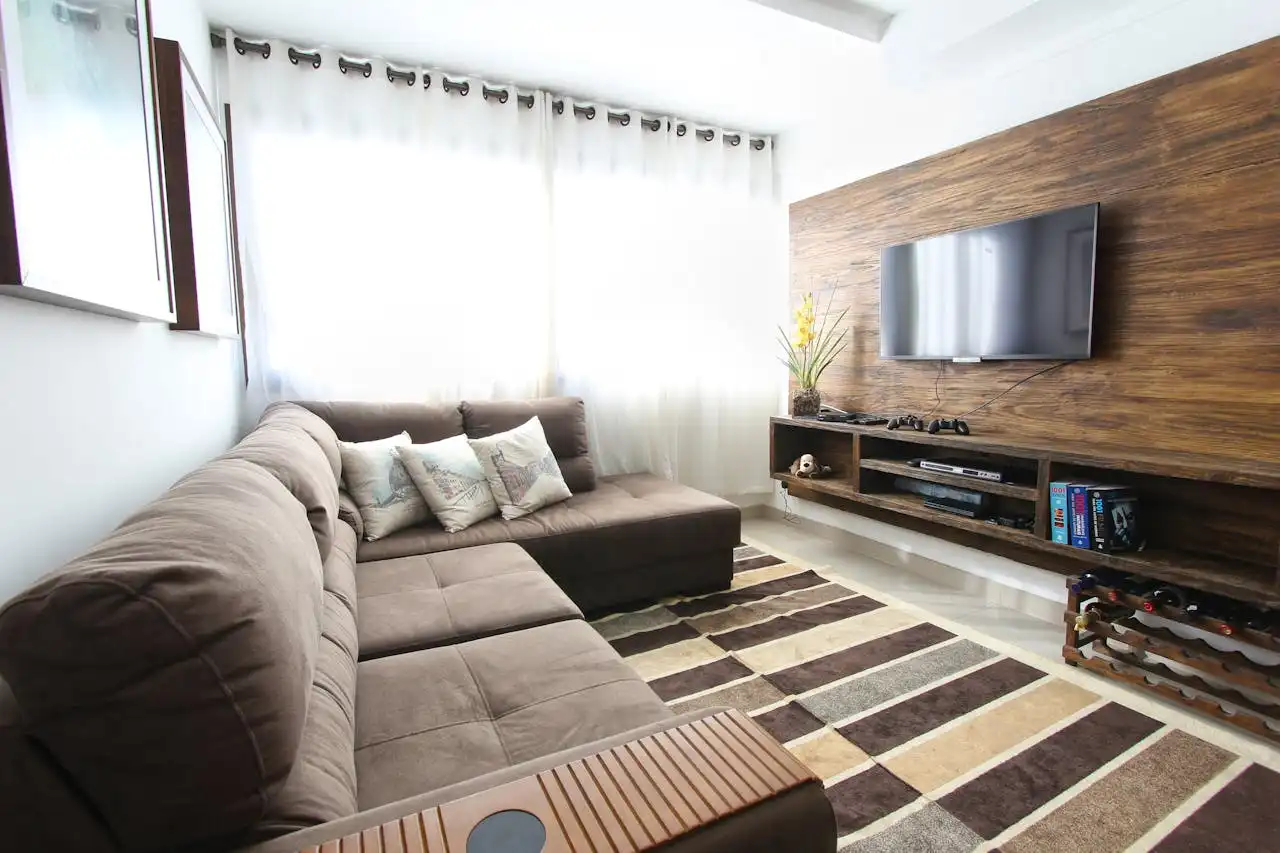
When I finally pulled my sofa away from the wall, angled my seating toward the TV instead of just pointing at it, and added a floor lamp in the corner – the room looked like a completely different space. I hadn’t bought anything new yet. That realization was genuinely humbling.
Budget Living Room Decor Ideas That Actually Work: The Complete Breakdown
Start With the Rug – And Get the Size Right
If there’s one thing I wish someone had told me earlier, it’s this: an undersized rug is worse than no rug at all. I bought a 5×7 for a medium living room once and it looked like I’d placed a bath mat in the middle of the floor. The sofa legs were floating above it. The whole room felt ungrounded.
For most apartment living rooms, you want at least an 8×10 – ideally with all the front legs of your seating arrangement resting on the rug. This is what creates what designers call “the conversation zone,” that feeling of a defined, intentional space within a room. The rug is less decoration and more architecture. It tells the room where it is.
Budget reality: a decent 8×10 synthetic rug typically runs between $80-200 depending on pile height and construction. Natural fiber options like jute are beautiful and often affordable, but fair warning – jute sheds noticeably, especially in the first few months, and it’s genuinely difficult to deep clean. If you have pets or kids, a flat-weave or low-pile synthetic in that price range will hold up significantly better. Layering a smaller natural fiber rug over a solid low-pile is a look that feels high-end and keeps costs manageable.
And please – measure your space before you order. Measure the seating area, not just the room.
Lighting Is the Whole Game (And the Most Underestimated Budget Move)
I remember the first time I got the lighting truly right in a space. I’d added a warm floor lamp in one corner, a small table lamp on the bookshelf, and swapped the overhead bulb for something in the 2700K range – that warm, amber tone that makes a room feel like evening even at noon. I turned everything on at dusk and stood in the doorway and honestly just stayed there for a minute. It was the first time that apartment had ever felt like a home.
What professional lighting designers call layered lighting is the single most affordable transformation available to renters. It means never relying on one source – specifically, never relying on that overhead fixture as your primary light. Overhead light is harsh and flat. It lights people from above (unflattering) and eliminates shadow (which is actually what gives a room depth and coziness).
The fix is simple and surprisingly cheap. A floor lamp with a warm-toned bulb (look for 2700-3000K on the packaging) typically costs under $60 for a perfectly functional version. A small table lamp on a side table or shelf adds another layer. Two non-overhead light sources transform a room. Three makes it feel intentional. All of them on a dimmer – if you can manage it without hardwiring anything – and you have a completely different space.
For renters: plug-in sconces that mount with adhesive or a simple hook are genuinely good now. They’re not as permanent as hardwired options, obviously, but a plug-in sconce with a warm Edison bulb flanking a mirror or piece of art? That’s a designer-looking detail that costs under $40 and leaves no damage.
The “Invest Here, Save Everywhere Else” Rule for Sofas
Okay, I have a strong opinion about this one. If you are going to spend money anywhere in your living room, it’s the sofa. Not because of aesthetics – though that matters – but because of foam density.
This is the thing almost nobody mentions when you’re sofa shopping: the single biggest predictor of how long a sofa will last isn’t the fabric, it isn’t the frame material, it’s the foam density inside the cushions. High-density foam – typically 1.8 lbs per cubic foot or above – holds its shape for years. Budget sofas often use low-density foam, sometimes as low as 1.2 lbs, and within 18 months those cushions are flat and sad and you’re sitting on what is essentially a very expensive wooden frame.
You can ask about foam density before buying, both in stores and from online retailers. Not every salesperson will know offhand, but a reputable brand will have it in their product specs. This one question will tell you more about a sofa’s longevity than any fabric description or “solid wood frame” claim.
I got this completely wrong for years. I bought two budget sofas in a row – both looked fine initially, both were embarrassing within two years. The third sofa I bought cost more than I wanted to spend, but I asked about foam density first and it still looks great four years later. That’s the math that actually matters.
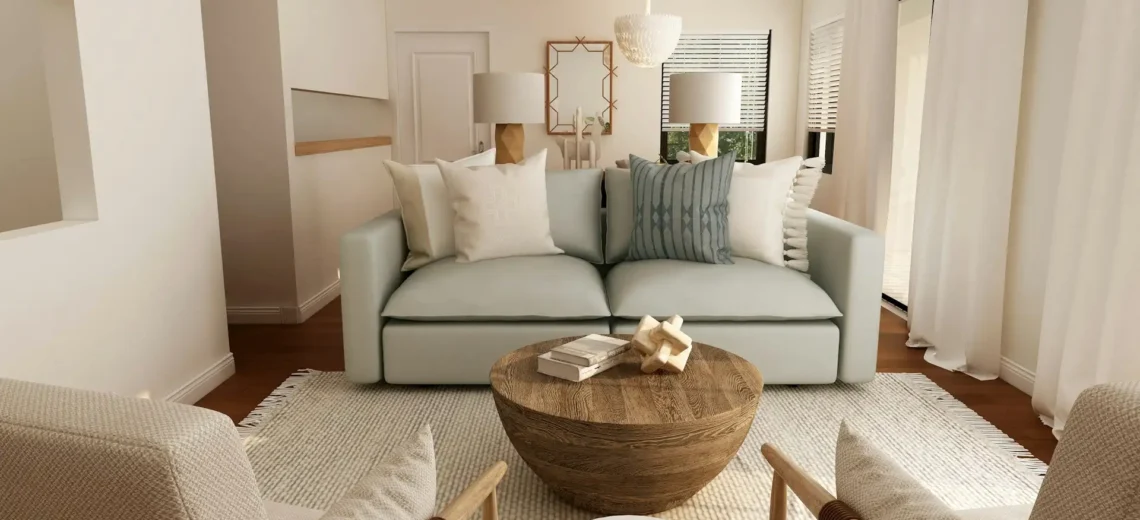
If a new sofa isn’t in the budget right now: a quality sofa cover, a few well-placed throw pillows in a cohesive neutral color family, and a throw draped naturally over one arm can visually refresh a tired piece without replacing it. Keep the colors calm – warm whites, soft oatmeal tones, earthy terracotta accents – and it reads intentional rather than “covering something up.”
Texture Is What Makes Budget Decor Look Designer-Made
The difference between a room that looks like it was decorated on a budget and one that looks curated isn’t usually the price of the individual pieces. It’s whether there’s enough contrast in texture and material.
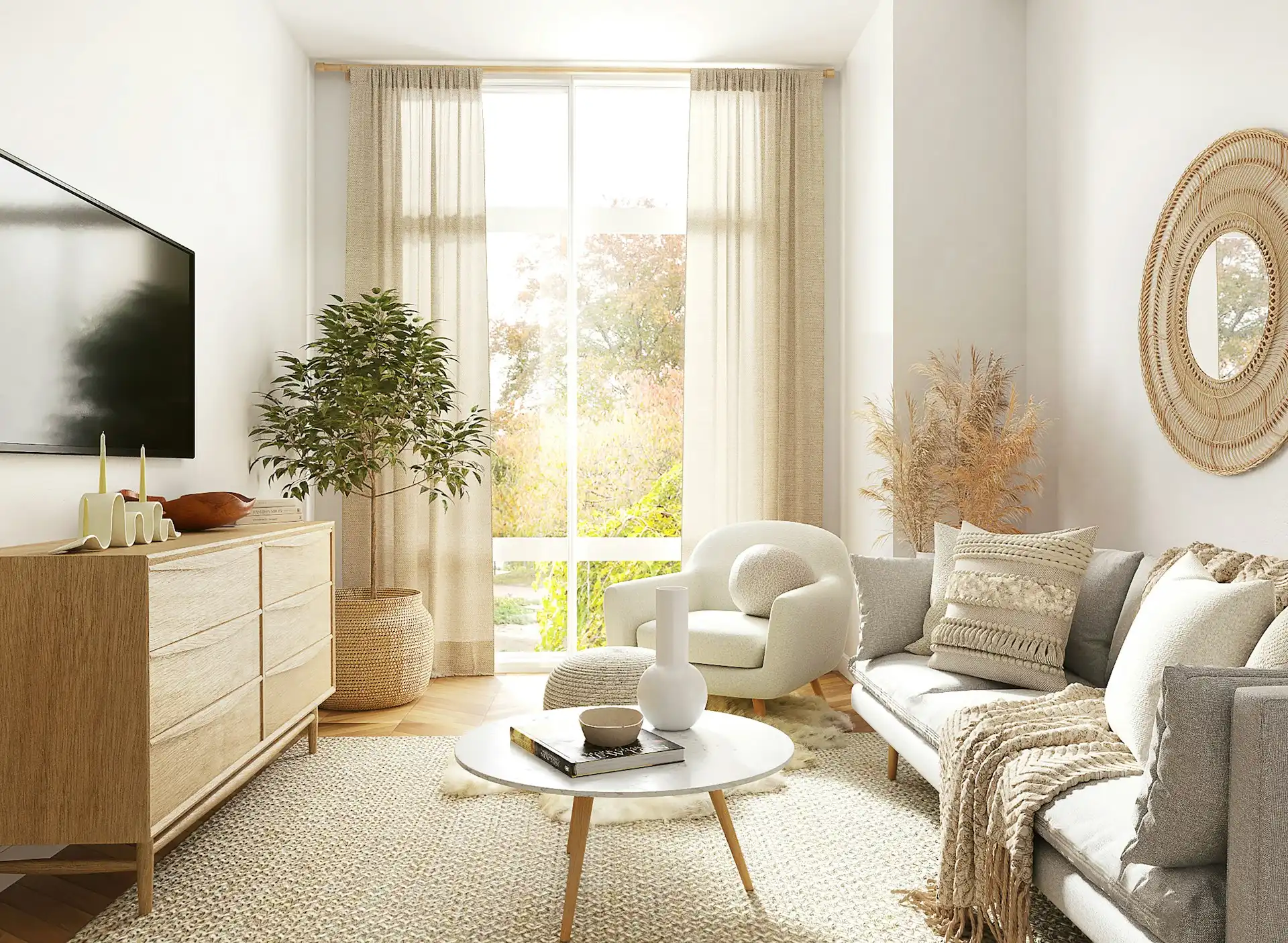
A smooth linen throw next to a chunky knit pillow next to a rough jute rug next to a cool ceramic vase – that layering of surfaces is what creates the visual richness that expensive rooms have. Each material reflects light differently. Each has a different visual weight. Together they create the sense that the room has been built over time rather than purchased all at once from one store.
This is something you can do almost entirely with what you already own, repositioned, plus one or two well-chosen additions. A genuine linen throw (not polyester pretending to be linen – the crinkle gives it away) typically runs $30-60 and immediately adds softness. A rattan or wicker accent – a small side table, a basket, a pendant shade – brings natural warmth and usually costs under $50 at thrift stores and discount home stores. The 60-30-10 rule is useful here: roughly 60% of your room’s color palette should be a dominant neutral, 30% a secondary tone, and 10% an accent. It keeps things cohesive without looking matchy.
Honest Truths About Budget Living Room Decor I Learned the Hard Way
The “before and after” timeline is a lie. Pinterest and Instagram show you a finished room. They never show you the four months of living with something that feels wrong, the three different rug positions, the “maybe if I add one more thing” spiral. Real decorating on a budget takes time because you’re making decisions slowly, thoughtfully, with limited funds. That’s not failure – that’s just how it actually works.
IKEA furniture is genuinely fine – if you finish it properly. I used to feel vaguely embarrassed about IKEA pieces. Then I started treating them like raw material instead of finished furniture. A coat of paint, hardware swapped out for aged brass or matte black pulls, legs replaced with tapered wood ones that screw in directly – these changes cost $20-40 and make a $60 cabinet look like something from a boutique shop. The underlying construction is MDF, which doesn’t hold screws well over time and really hates moisture, so keep it away from humid spaces. But in a living room, styled properly? It works.
I spent more on art than I’ve ever admitted and it still didn’t feel right. Here’s the vulnerable truth: I went through a phase of buying actual framed prints thinking they’d elevate my space, and I probably spent close to $200 over two years on pieces that never quite fit. What actually worked was a thrifted frame (usually under $5), matting cut to size at a craft store, and a botanical or architectural print I downloaded and printed at a copy shop for about $3. The whole thing cost under $15 and looked better than anything I’d bought. The frame quality and the matting are what signal “intentional” to a viewer – not the price tag on the art itself.
Plants are doing more work than you realize. I’m still not 100% sure why a living plant changes a room’s feeling so dramatically, but it does. Something about the irregular, organic shape in a space full of hard angles just makes everything feel more alive and less staged. A pothos or a snake plant can cost under $15, survives nearly any apartment condition, and adds what no purchased accessory quite replicates. Don’t overcomplicate this one.
Budget-Friendly Living Room Decor Checklist
- [ ] One clear focal point established – TV wall, window, fireplace, or intentional art grouping
- [ ] Rug is properly sized – front legs of all seating on the rug, or rug large enough to ground the whole arrangement
- [ ] At least 2-3 non-overhead light sources in use
- [ ] Clear traffic paths of at least 2-3 feet throughout the space
- [ ] Surfaces aren’t overcrowded – edit until breathing room is visible
- [ ] At least two distinct textures present in the textiles (rug, throw, pillows)
- [ ] Color feels consistent – dominant neutral, secondary tone, one or two accent pieces
- [ ] At least one living plant present
Making Budget Living Room Decor Work for Your Actual Space
If you’re in a small apartment: The instinct to push everything against the walls to “save space” usually backfires. A sofa floating slightly away from the wall with a narrow console table behind it actually makes a room read larger, because negative space – that breathing room around and between pieces – signals intention. In a truly tiny space, choose one or two larger pieces over several small ones. Small items in a small room create visual noise; one well-sized sofa and one good rug are better than three budget accent chairs and four side tables.
Budget expectation: you can genuinely transform a small apartment living room for $200-400 if you start with what you have and add strategically – rug first, lighting second, one or two textural accents third. You don’t need to replace everything.
If you’re renting: Every wall-mounted item is a potential deposit conversation. The good news is that command strips, tension curtain rods, and peel-and-stick options have genuinely improved. Floor-length curtains hung on a tension rod (or a rod mounted with adhesive hooks) immediately make a room look taller and more finished. Removable peel-and-stick wallpaper on one wall can define a space dramatically without permanent commitment – just make sure your walls are clean and primed before applying. Freestanding bookshelves, leaning mirrors, and floor lamps do everything a mounted version would do without touching the walls at all.
If you’re starting from scratch with very little: Prioritize in this order: rug, then lighting, then one anchor piece (usually a sofa or a good chair). Everything else – pillows, art, plants, accessories – can be added gradually and affordably over time. Don’t try to complete the room all at once. Rooms built slowly, piece by piece, tend to look more interesting anyway. They look lived in instead of purchased.
If you’re feeling overwhelmed right now and just need one thing to do first – move your furniture away from the walls. That’s it. Pull the sofa out, pull the chairs in toward a center point, and just look at it. It will probably look better immediately. And it costs absolutely nothing.
Your Budget Living Room Decor Questions, Answered Honestly
Q: How do I make cheap furniture look expensive?
A: Honestly, it’s less about the furniture itself and more about what surrounds it. A budget sofa with quality throw pillows, a properly sized rug underneath, and good lighting around it reads completely differently than the same sofa shoved against a bare wall under a single overhead bulb. Cohesion does the heavy lifting – consistent color temperature in your textiles, matching metal tones in your hardware and light fixtures, and edited surfaces (no clutter) will make budget pieces look intentional.
Q: What’s the single best thing I can do for a rental living room on a tight budget?
A: Add a warm floor lamp in a corner that currently has nothing. Under $60 for a basic one, no drilling required, no landlord conversation needed – and the shift in atmosphere is immediate. If you can only do one thing, do that.
Q: Is it worth buying a designer piece when everything else is budget?
A: It depends on what the piece is and how long you’ll use it. A quality sofa – yes, genuinely worth it, the foam density issue is real and it will outlast three cheap ones. A designer decorative vase? Probably not. Invest in the structural pieces (sofa, rug, lighting) and spend less on the accessories. That’s where the math actually works in your favor long-term.
Q: How do I decorate a small living room without it feeling cluttered?
A: Fewer things, done better. This sounds obvious but it runs against every decorating impulse most of us have. One oversized piece of art reads better than a gallery wall of six small frames in a tight space. One large rug is better than a layered rug situation unless the room is generous. Vertical elements – tall bookshelves, floor-to-ceiling curtains, a tall plant – draw the eye up and make the room feel larger without adding floor clutter. And edit constantly. If something doesn’t earn its place every six months, it probably doesn’t belong there.
You Can Check Also :
Small Living Room Layout Mistakes to Avoid (And What to Do Instead)
The Ultimate Guide to Decorating Your Living Room on a Budget
The Room You’re Building Is Allowed to Take Time
Here’s something I’ve come to actually believe after years of this: the rooms that feel most like home are almost never the ones that were finished all at once. They’re the ones that were adjusted, reconsidered, lived in, argued over, and slowly refined until they actually reflected the person in them.
Budget living room decor done well isn’t about finding the right cheap things – it’s about understanding what you’re doing well enough to make deliberate choices. A $15 thrift store lamp in exactly the right place beats a $200 lamp bought in a hurry. A rug you measured for beats a beautiful rug that’s the wrong size. A layout you thought about beats one you defaulted to because it “seemed easiest.”
You’re not behind. You’re not doing it wrong. You’re figuring it out in real time, in a real space, with a real budget – and that’s exactly the process. The room you want isn’t something you find. It’s something you build, slowly, by paying attention to what actually makes you feel at home when you walk through the door.
That’s the whole thing.
If you try something from this guide, I’d genuinely love to hear what worked – or what didn’t. Drop a comment or save this for later when you’re ready to start. And if your living room is still a work in progress – mine is too, honestly. That part never fully ends.